1923 – 1994
Masutatsu Oyama: The Last Samurai
The Founder
Japanese Association of the Seekers of the Highest Truth
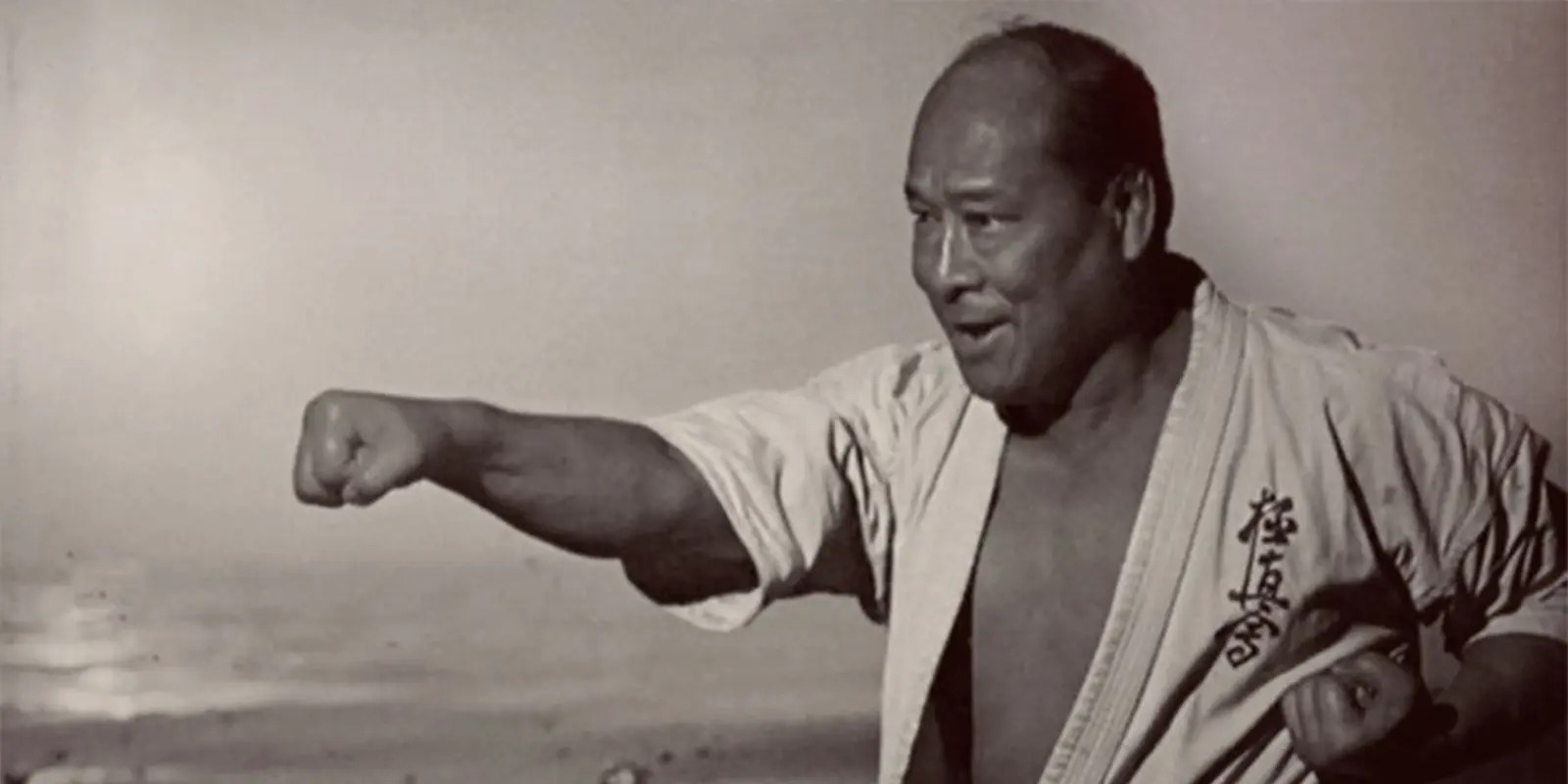
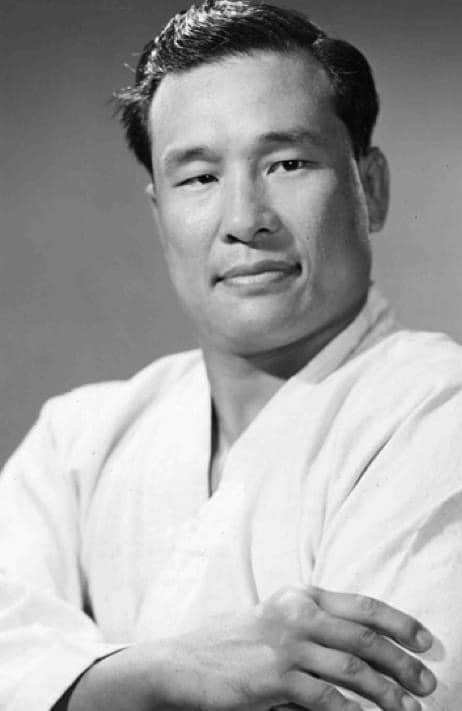
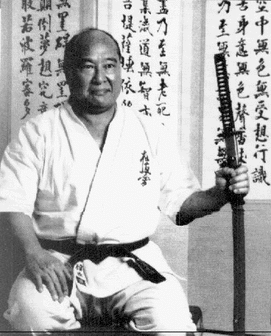
The founder of Kyokushinkai was the Japanese Masutatsu Oyama. His life was extraordinary, devoted entirely to self-improvement and popularization of modern martial arts in both its spiritual and physical aspects.
In 1945, Oyama joined the squad of suicide aviators (kamikaze), wanting to lay down his life for his beloved homeland. He was saved from death by the end of hostilities. Already during his lifetime he was called "The Last Samurai."
Achievements
Martial Arts Mastery
- 1936: Master's degree in Chinese Kempo
- 2nd Dan in Karate under Gichin Funakoshi
- 4th Dan in Judo
- 1947: World Championships winner in Kyoto
- 1974: Awarded 9th Dan (later 10th Dan)
The Mountain Hermit
Mount Kiyosumi Isolation
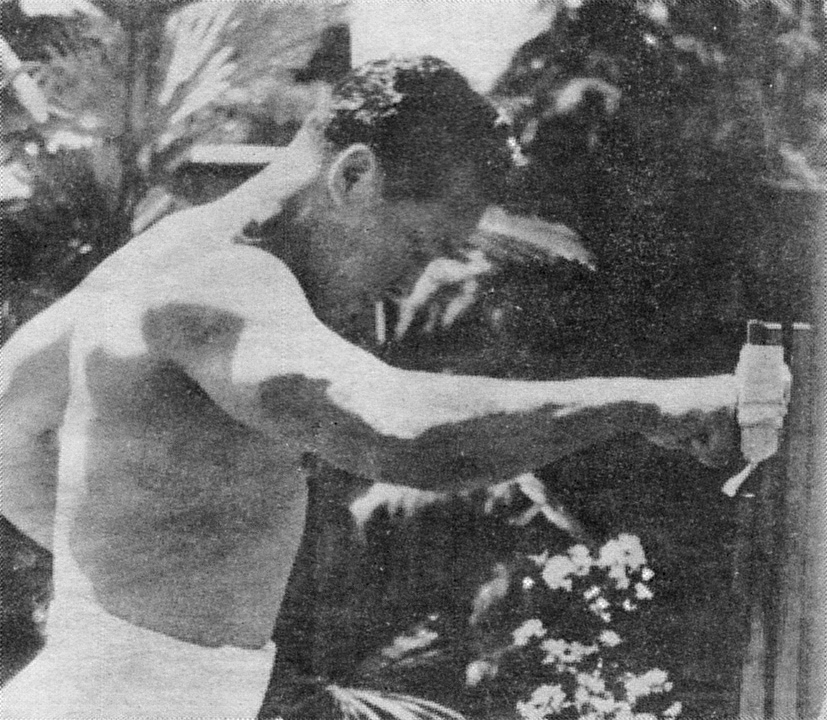
Following the example of the Buddhist monk Nichiren, Oyama went alone to Mount Kiyosumi after winning the 1947 World Championships. In hermit conditions, for 18 months he perfected his skills in the art of karate and Zen meditation.
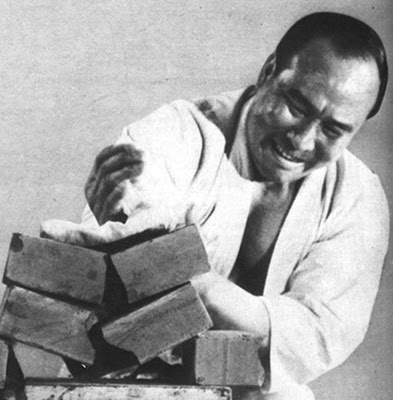
After returning from the mountains, he became the only karateka in history to fight a bull. The clash in Chiba ended with Oyama's victory – the bull was killed with a single punch between the eyes. The New York Times called him "God's Hand."
Philosophy & Ethics
Oyama was convinced that karate is not only a martial art, but above all a carrier of Far East tradition and culture – the ethical values proclaimed by Confucius and Lao-Tse.
He always told his students that karate begins and ends with courtesy, and that while physical development is the beginning of this martial art, spiritual development is the ultimate goal.
His travels around the world made Kyokushin extremely popular. Currently, over 2 million people around the globe practice this martial art.
The Martial Way begins and ends with courtesy. Therefore, be properly and genuinely courteous at all times.
Dojo Kun
The Oath of the Kyokushin Practitioner
We will train our hearts and bodies for a firm unshaking spirit.
We will pursue the true meaning of the Martial Way, so that in time our senses may be alert.
With true vigor, we will seek to cultivate a spirit of self denial.
We will observe the rules of courtesy, respect our superiors, and refrain from violence.
We will follow our religious principles and never forget the true virtue of humility.
We will look upwards to wisdom and strength, not seeking other desires.
All our lives, through the discipline of Karate, we will seek to fulfill the true meaning of the Kyokushin Way.
11 Mottos of Mas Oyama
Zayu no Mei Juichi Kajo
The Martial Way begins and ends with courtesy. Therefore, be properly and genuinely courteous at all times.
Following the Martial Way is like scaling a cliff – continue upwards without rest. It demands absolute and unfaltering devotion to the task at hand.
Strive to seize the initiative in all things, all the time guarding against actions stemming from selfish animosity or thoughtlessness.
Even for the Martial Artist, the place of money cannot be ignored. Yet one should be careful never to become attached to it.
The Martial Way is centered in posture. Strive to maintain correct posture at all times.
The Martial Way begins with one thousand days and is mastered after ten thousand days of training.
In the Martial Arts, introspection begets wisdom. Always see contemplation on your actions as an opportunity to improve.
The nature and purpose of the Martial Way is universal. All selfish desires should be roasted in the tempering fires of hard training.
The Martial Arts begin with a point and end in a circle. Straight lines stem from this principle.
The true essence of the Martial Way can only be realized through experience. Knowing this, learn never to fear its demands.
Always remember, in the Martial Arts, the rewards of a confident and grateful heart are truly abundant.
Training in Kyokushin
Five Essential Elements
- Kihon
Basic techniques aimed at teaching correct form of strikes, kicks and blocks.
- Ido Geiko
Movement drills to develop fluidity and transitions between techniques.
- Kata
Formal defense and attack arrangements preserving traditional knowledge.
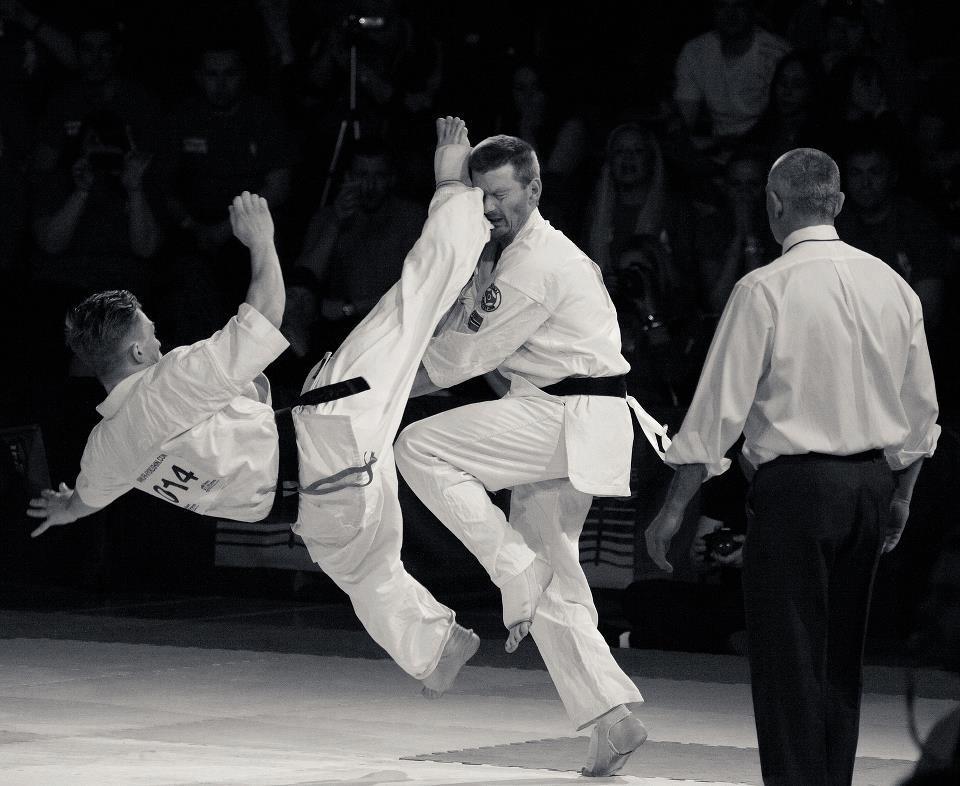
- Kumite
Free fight - the essence of Kyokushin karate, full-contact sparring.
- Iken
Mental training and unity of mind and body from Chinese Wushu Yiquan.
The Martial Way begins with one thousand days and is mastered after ten thousand days of training.
Spiritual Development
The ultimate goal of karate training is the spiritual development of the practitioner. Through demanding physical exercises, the karate adept overcomes weakness, shyness, and indecision, becoming a better person.
Every adept of Kyokushin karate should know the oath (Dojo Kun) and the etiquette of the dojo. Masutatsu Ōyama claimed that "karate without a fight is just a dance."
Belt System
Student and Master Degrees
Student Degrees (Kyū)
From 10th Kyū to 1st Kyū
Master Degrees (Dan)
From 1st Dan to 10th Dan
- 1st Dan (Shodan)Black belt with golden stripe
- 2nd Dan (Nidan)Black belt with two golden stripes
- 3rd Dan (Sandan)Black belt with three golden stripes
- 4th Dan and beyondAdditional stripes for each degree, up to the 10th Dan – the highest step in Kyokushin karate
Legacy in Literature
Books by Masutatsu Oyama
- What is Karate?Published1958
- Here's KaratePublished1965
- Dynamics of KaratePublished1966
- Fighting SpiritPublished1972
- The Way of KyokushinPublished1976